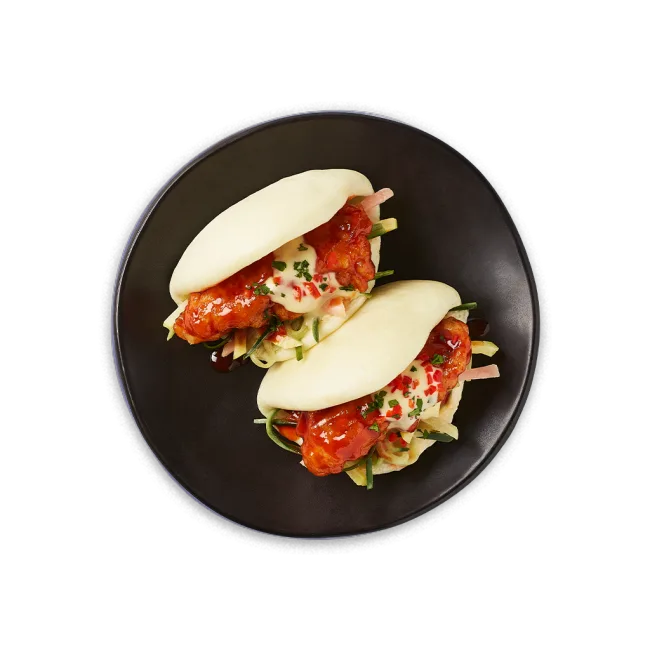
 £9.50
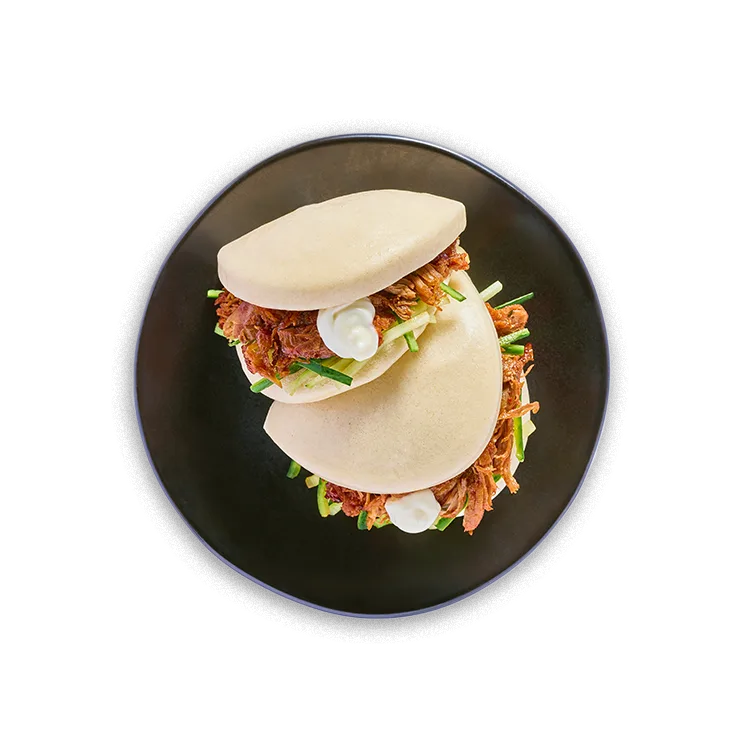
£9.50Korean Fried Chicken Bao Buns
pickled rainbow slaw. gochujang sauce. yuzu mayo
- 729Cal
- 18.6gProtein
- 99.1gCarbs
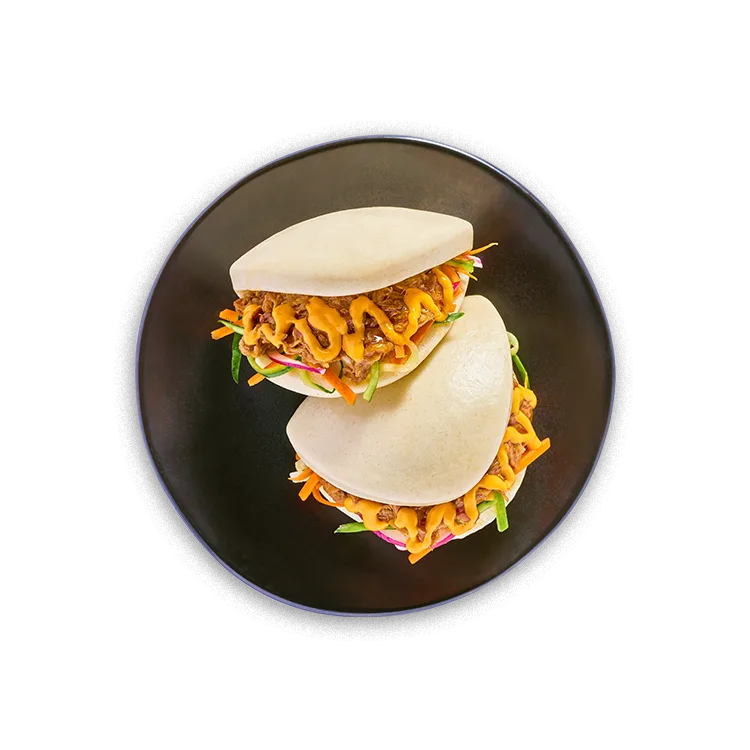
fresh asian slaw. sriracha vegan mayo
Contains: cereals containing gluten, wheat, soya, sulphites
Wagamama korean barbecue brisket bao buns cost £9.50 and carry 521 kcal, and they are the light surprise of the bao page: the beef pair with the smallest calorie count, the lowest salt and close to the least sugar on the list. Slow cooked brisket in korean barbecue sauce with fresh asian slaw and sriracha vegan mayo in steamed buns.
Brisket earns bao buns better than almost any filling, since the same collapse that makes it shred into ramen broth lets it pack into a bun without fighting back. The korean barbecue treatment runs smoky and garlicky rather than sticky sweet, which is where the modest sugar figure comes from, and the sriracha mayo supplies a clean heat over the top. The slaw stays fresh rather than pickled, a crunch more than a counterpoint.
Against its neighbours the numbers read almost virtuous: 521 kcal for the pair sits two hundred below the fried fillings, the salt at around 2.6 g is the best on the page, and the protein lands a reasonable 17 g. For anyone who wants the bao experience with the least dietary argument afterwards, this is the pair.
The mayo is worth a note: wagamama uses a vegan mayo here under beef, a kitchen simplification that quietly benefits anyone avoiding egg. The pair itself is emphatically not vegetarian, but the choice shows how the bao line is built for mixing across diets at one table.
Asked how much are the brisket bao at wagamama, the answer is £9.50 published, with the standard location movement. They sit well beside the beef brisket and kimchee gyoza for a slow cooked beef theme, and a cloudy lemonade keeps the drink lighter than the smoke.
Per serving.
Values approximate, from wagamama's published data. Updated 03 September 2026.Report an error
The brisket from the tantanmen ramen recipe moonlights here; if you braise once, you eat twice. Otherwise a small braise with korean flavours does the job in an afternoon.
Brisket
Buns and finish
0 of 5 steps
Serve with: Beef brisket and kimchee gyoza to double the theme, and a cloudy lemonade.
£9.50pickled rainbow slaw. gochujang sauce. yuzu mayo
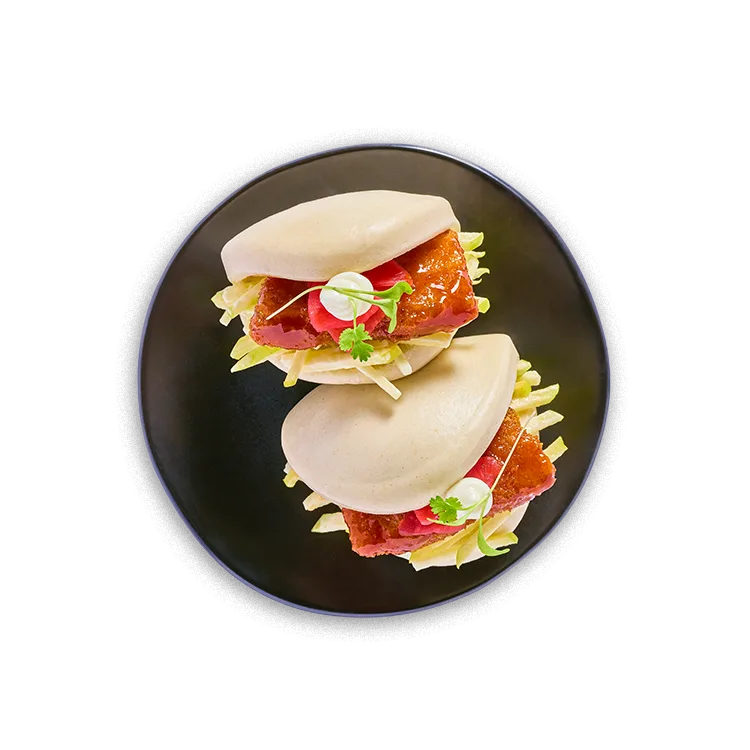 £9.50
£9.50apple slaw. korean barbecue + okonomiyaki sauce
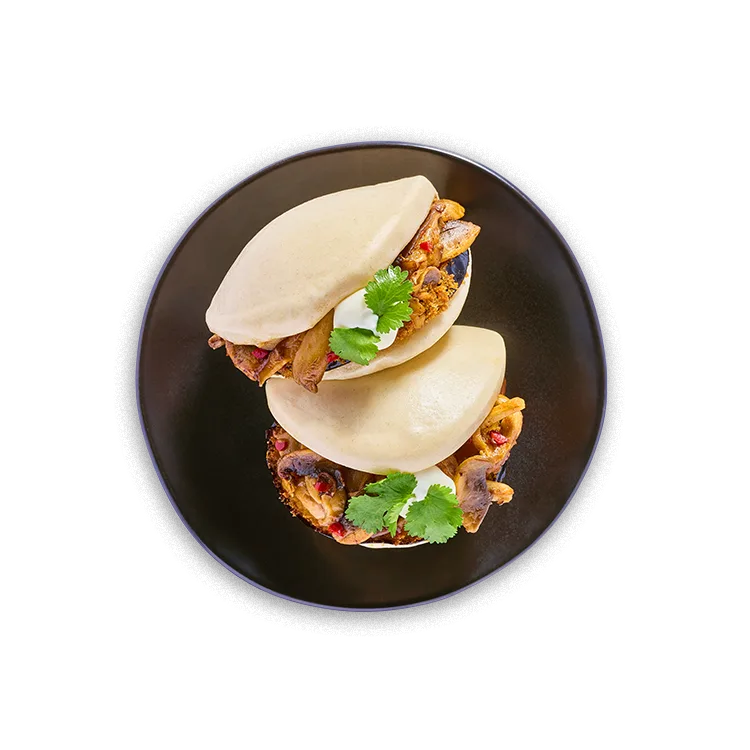 £9.30
£9.30panko aubergine. vegan mayo
 £9.70
£9.70cucumber. cherry hoisin. vegan mayo (may contain small bones)
Check which of the UK restaurants is closest, with opening hours and directions.
Wagamama Locations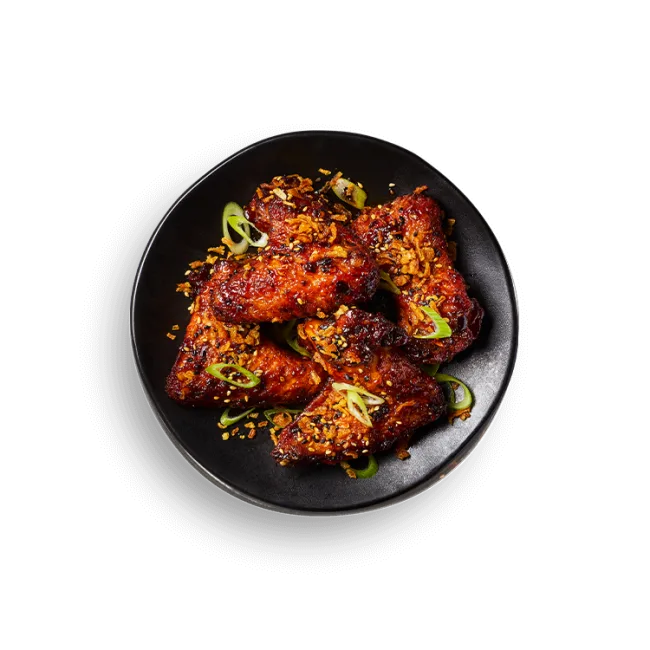 £10.50
spicy buldak sauce. crispy + spring onions. sesame seeds
 £19.50
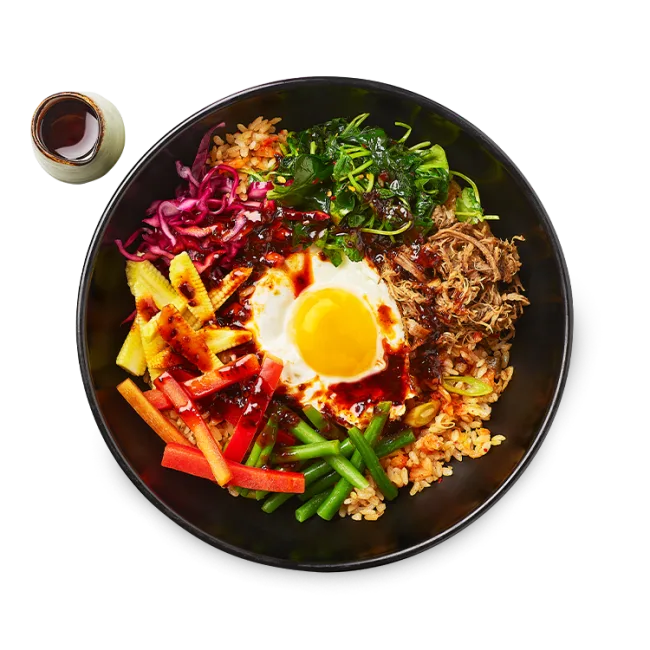
spicy buldak sauce. beef brisket. pickled red cabbage. red pepper. baby corn. green beans. fried egg. pea shoots. kimchee fried rice
 £4.50
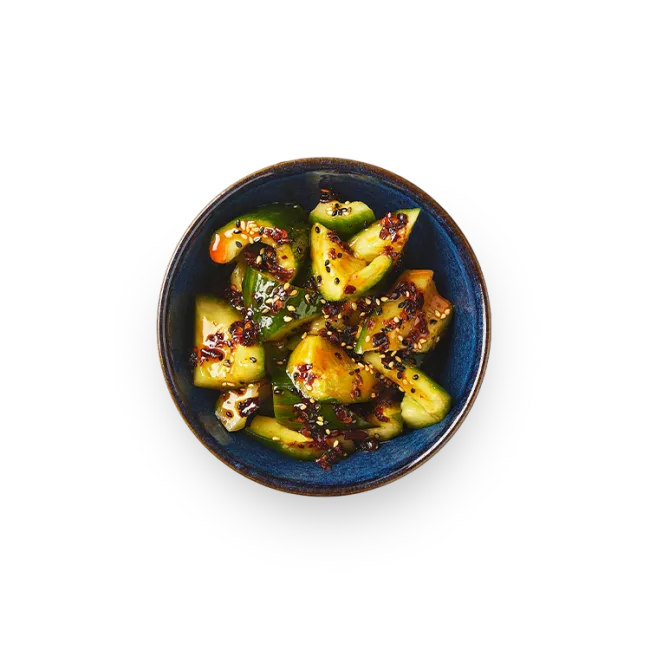
£4.50smashed cucumber topped with crispy chilli oil. sesame seeds + oil
 £5.10
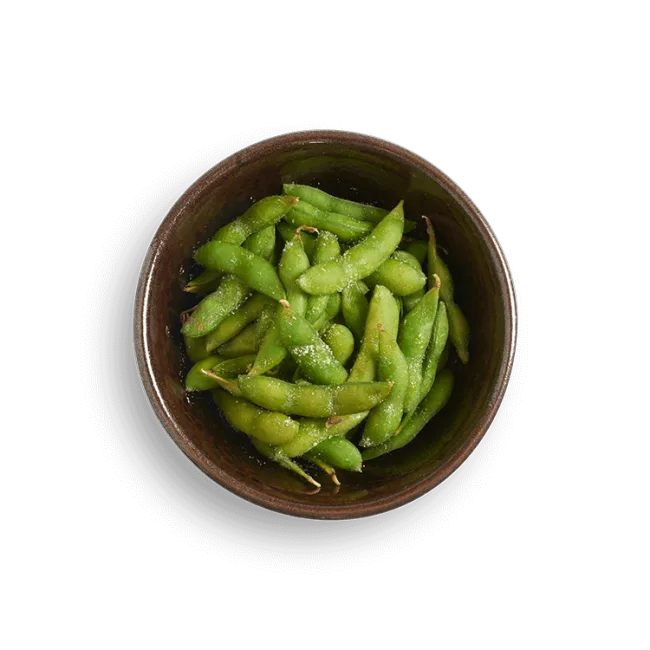
£5.10beans with salt
Comments
No comments yet. Be the first to say something.