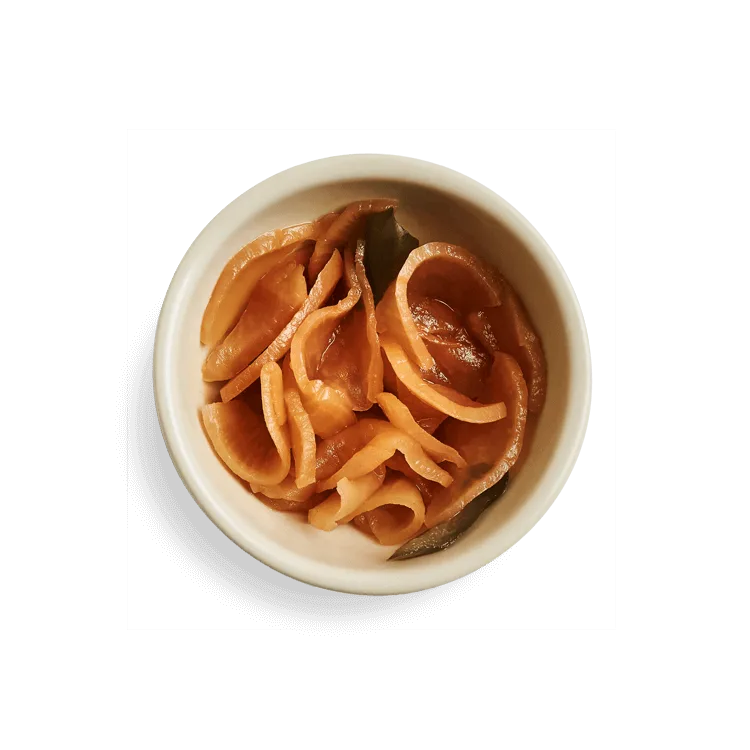
 £1.20
£1.20Katsu Pickles
katsu pickles
- 5Cal
- 0.1gProtein
- 1gCarbs
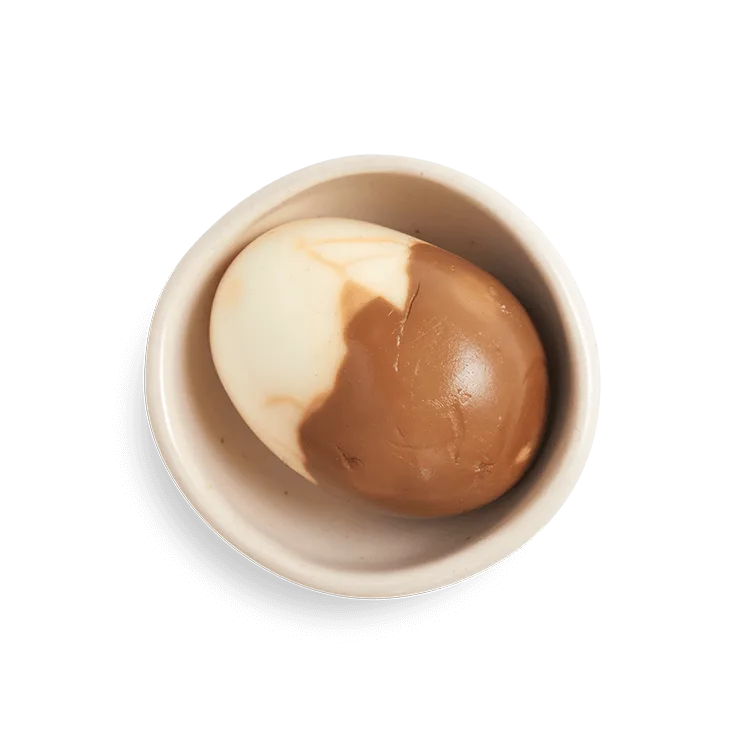
a boiled egg marinated in tea
Contains: eggs, soya
Wagamama tea stained egg costs £1.20 and carries 69 kcal, a boiled egg marinated in tea until the white turns amber and the flavour follows: the menu's cheapest protein and the single best upgrade a bowl of ramen can buy.
The technique is the ajitsuke tamago of Japanese ramen bars taken through a tea soak: soft boiled, peeled, steeped until the tannins mark the white in marble veins and the yolk holds its fudge. On the grilled chicken ramen or the chilli chicken it completes what the bowl started; several bigger bowls carry one already, which is the menu telling you what it thinks eggs are for.
The numbers work as hard as anything on the menu: 69 kcal of essentially pure food, six grams of protein and a fat figure the yolk earns honestly, for £1.20. Protein per penny, nothing in the building competes.
The how much is the egg question answers itself into the ordering habit worth forming: any ramen without an egg gains one, any donburi missing richness takes one, and hungry orders add one the way sandwiches add cheese.
It is the one extras pot that is not vegan, obviously, and the one that turns a light bowl into a proper meal for pocket change. Order it with the kare burosu for a vegetarian bowl that suddenly eats like dinner, and never let a plain ramen leave the pass without one again.
Per serving.
Values approximate, from wagamama's published data. Updated 30 August 2026.Report an error
The tea stained egg from the ramen recipes, standing alone: soft boil, iced water, and an overnight soak in tea and soy. A batch of six costs minutes and improves a week.
Eggs and soak
0 of 5 steps
Serve with: Any ramen without one, the kare burosu especially, or instant noodles elevated beyond their station.
Check which of the UK restaurants is closest, with opening hours and directions.
Wagamama Near You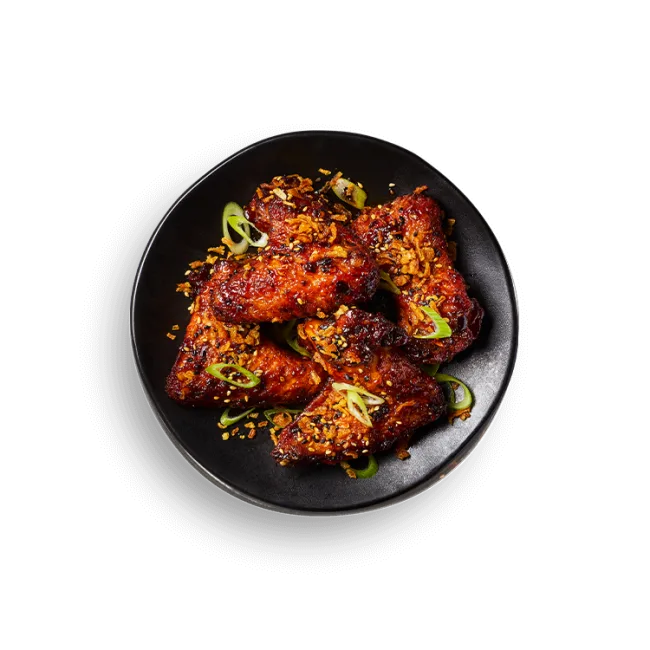 £10.50
spicy buldak sauce. crispy + spring onions. sesame seeds
 £19.50
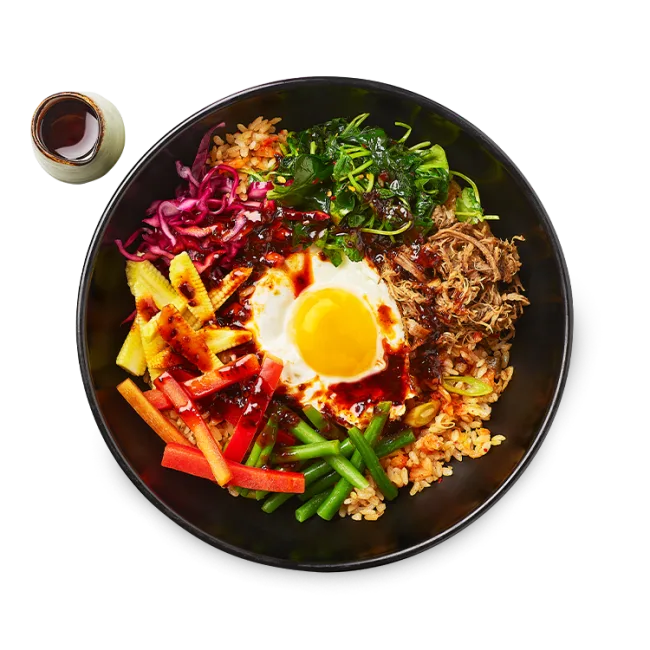
spicy buldak sauce. beef brisket. pickled red cabbage. red pepper. baby corn. green beans. fried egg. pea shoots. kimchee fried rice
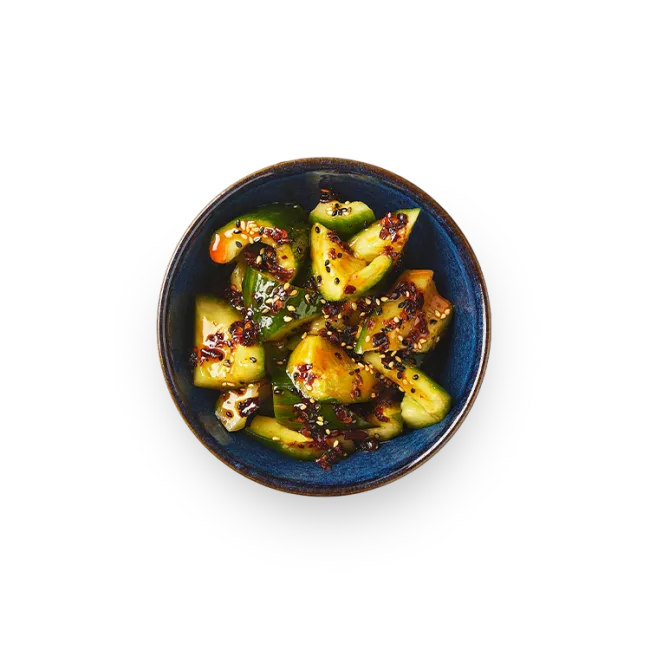 £4.50
£4.50smashed cucumber topped with crispy chilli oil. sesame seeds + oil
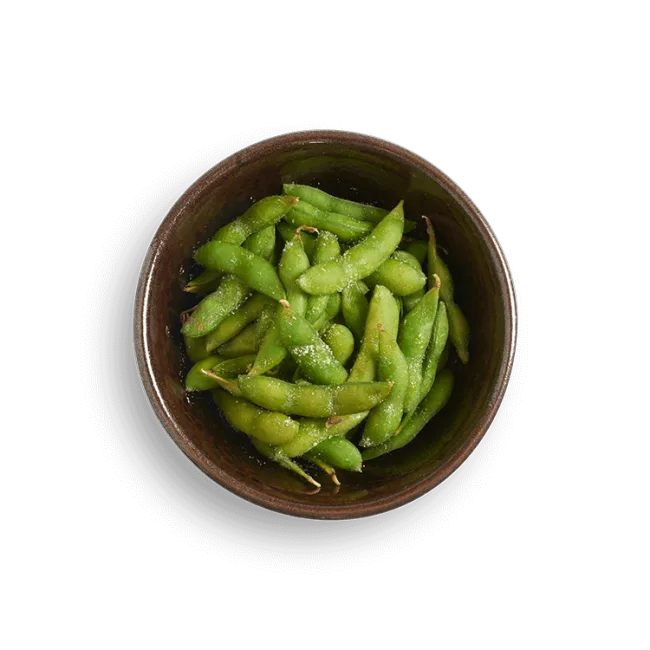 £5.10
£5.10beans with salt
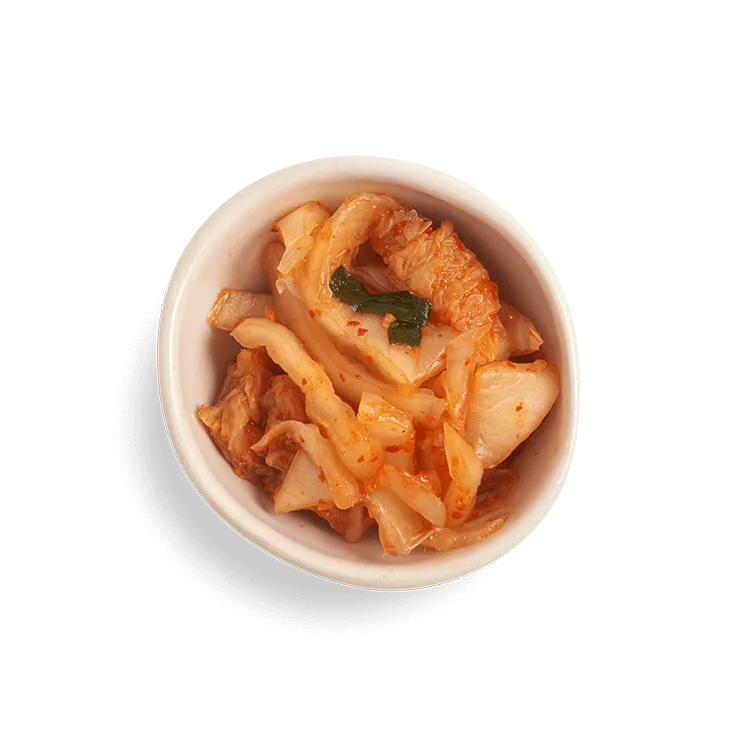
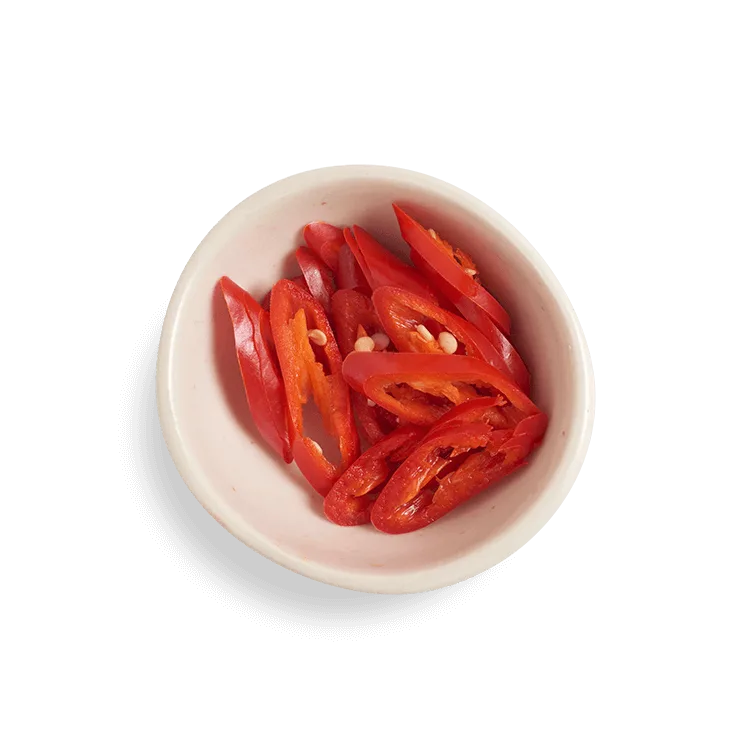
Comments
No comments yet. Be the first to say something.