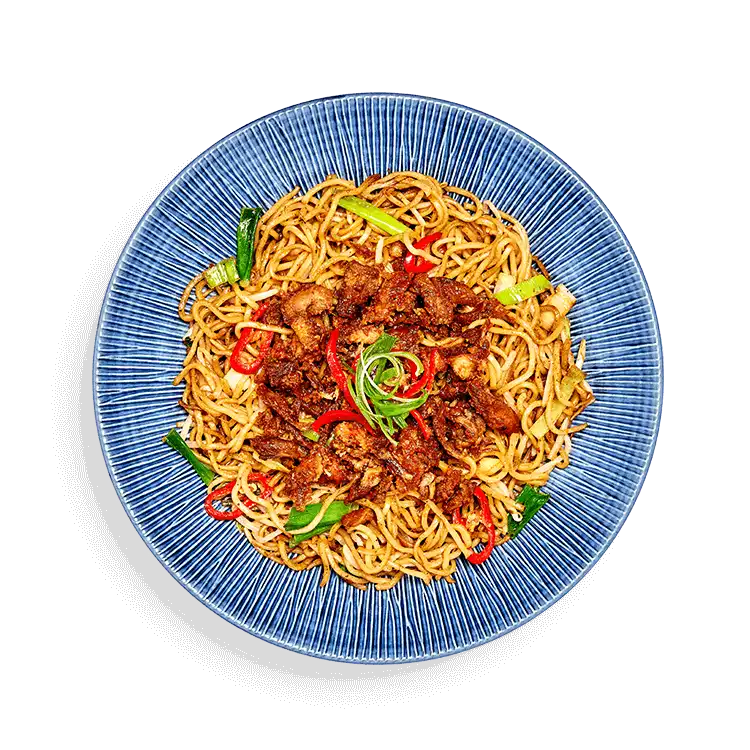
 £21.40
Saku Saku Duck Soba
crispy duck. noodles. amai sauce. egg. beansprouts. leek. spring onion. chilli. spicy teriyaki sauce (may contain small bones)
- 933Cal
- 46.5gProtein
- 88.3gCarbs
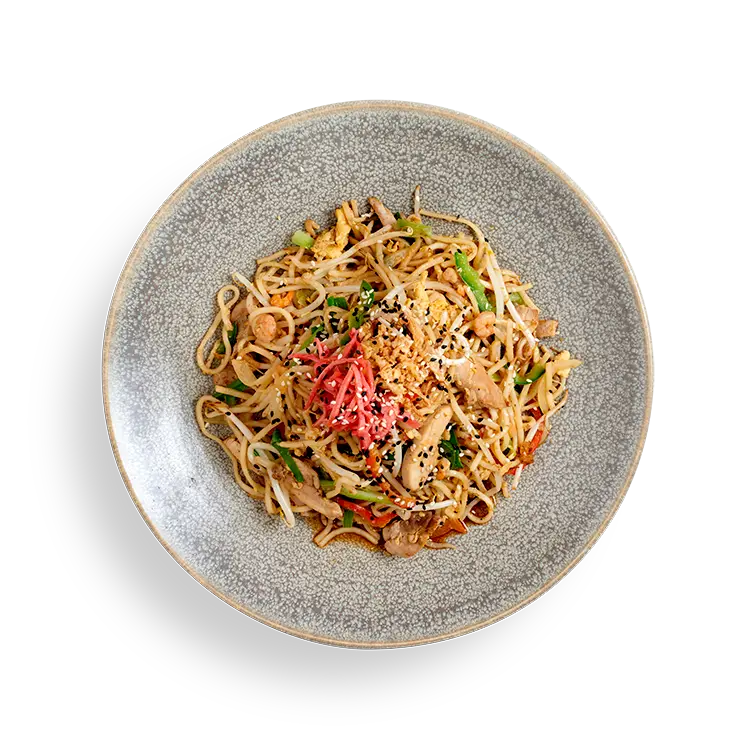
noodles. egg. peppers. beansprouts. fresh + crispy onions. pickled ginger. sesame seeds
Contains: cereals containing gluten, wheat, crustaceans, eggs, sesame, soya
Wagamama chicken and prawn yaki soba costs £15.90 and carries 789 kcal, and it is the oldest dish on the teppanyaki page, on the menu in some form since the chain's early days. Egg noodles fried on the teppan with chicken, prawns, egg, peppers, beansprouts and both fresh and crispy onions, finished with pickled ginger and sesame seeds.
This is the dish that teaches people what teppan cooking does. The noodles pick up char where they touch the iron, the egg laces through them in ragged ribbons rather than neat pieces, and the crispy onions land somewhere between garnish and seasoning. The pickled ginger is doing the most important work on the plate, the sharp pink counterpoint that resets your palate between fatty, smoky mouthfuls, and pushing it aside misses the design of the dish.
The numbers make an argument for it too. The chicken and prawn yaki soba calories at 789 kcal sit well below the big ramen and curry plates, the protein lands a useful 34 g from the two proteins, and the sugar is the lowest of any main on the teppanyaki page because there is no glaze, just seasoning. The salt stays moderate for a wok dish.
Anyone asking how much is the chicken and prawn yaki soba will find £15.90 on the board, a published price with the usual London and airport movement. It shares the table well: duck gyoza against the smoke, or kimchee if the plate feels too polite. For a classic order, this plus a cloudy lemonade is as close to old school wagamama as the current menu gets.
Per serving.
Values approximate, from wagamama's published data. Updated 09 September 2026.Report an error
Yaki soba at home fails when the pan is timid. Use the biggest flat pan you own, get it properly hot, and cook in stages so nothing steams.
Sauce
Pan
0 of 6 steps
Serve with: Duck gyoza, and keep the pickled ginger on the plate; it is the built in palate cleanser.
£21.40crispy duck. noodles. amai sauce. egg. beansprouts. leek. spring onion. chilli. spicy teriyaki sauce (may contain small bones)
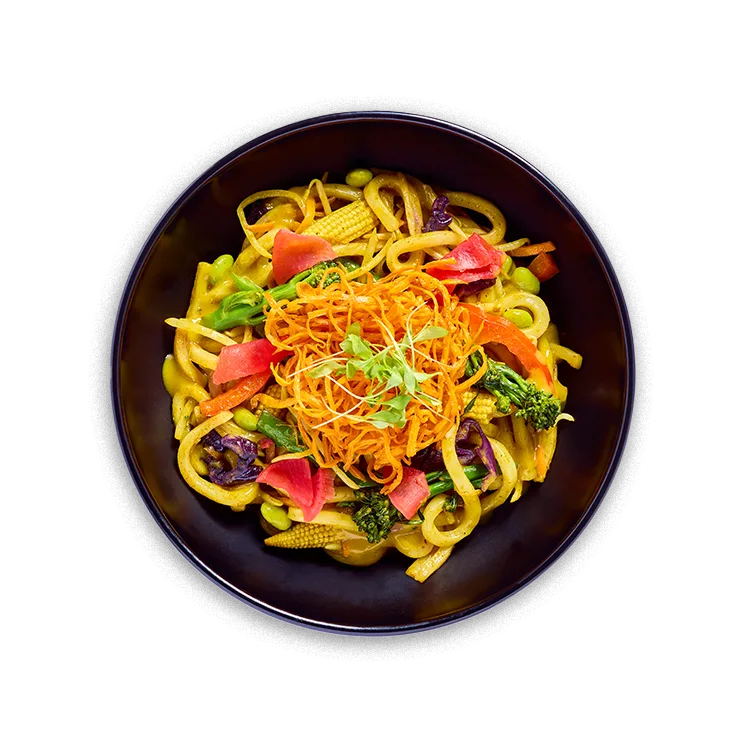 £13.90
noodles. katsu sauce. red pepper + cabbage. broccoli. carrots. beansprouts. baby corn. edamame beans. crispy sweet potato
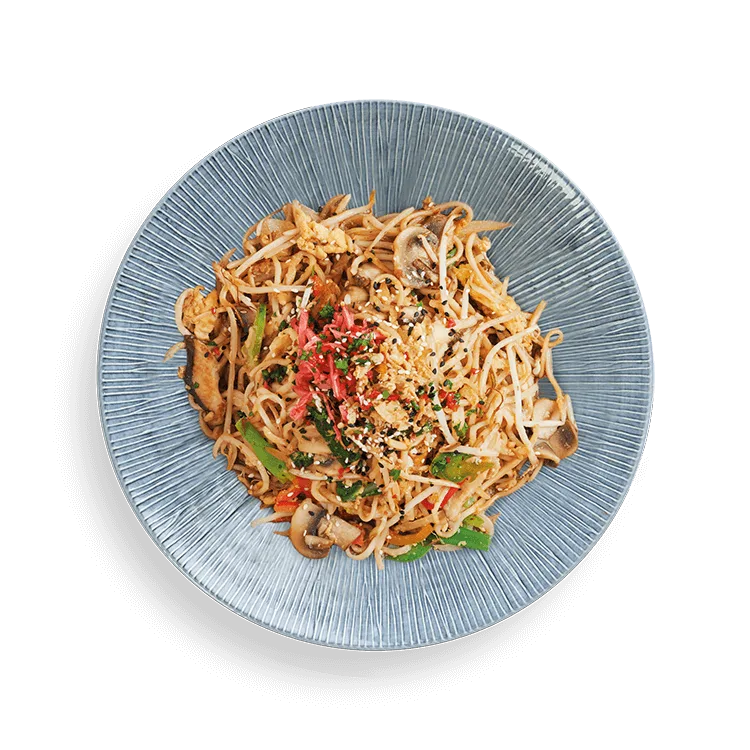 £15.80
noodles. peppers. beansprouts. fresh + crispy onions. pickled ginger. sesame seeds
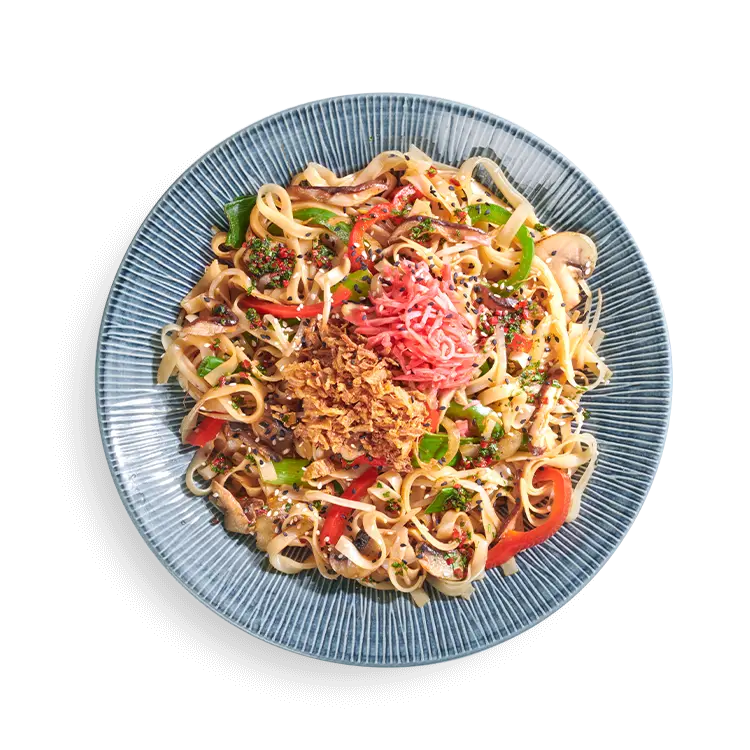 £15.80
noodles. peppers. beansprouts. fresh + crispy onions. pickled ginger. sesame seeds
Check which of the UK restaurants is closest, with opening hours and directions.
Wagamama Near You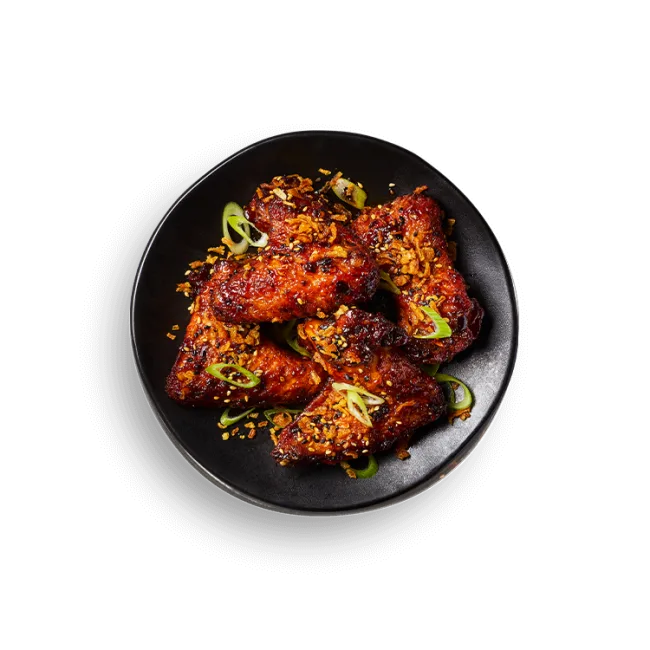 £10.50
spicy buldak sauce. crispy + spring onions. sesame seeds
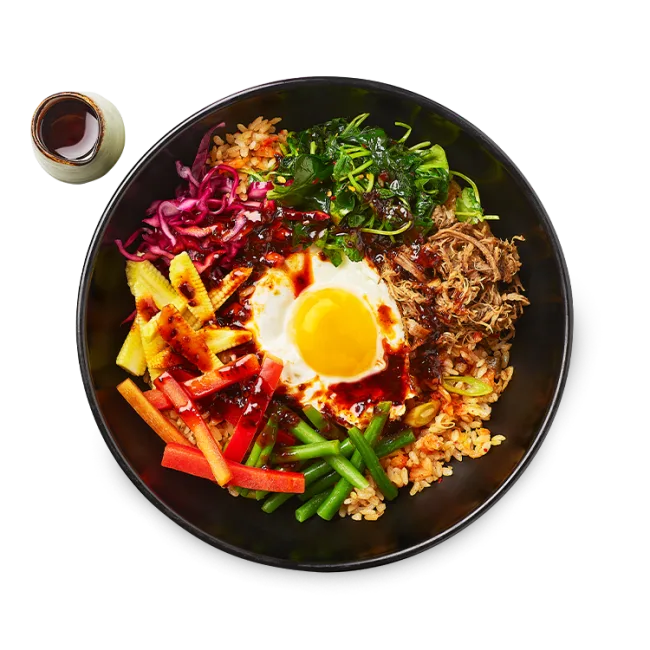 £19.50
spicy buldak sauce. beef brisket. pickled red cabbage. red pepper. baby corn. green beans. fried egg. pea shoots. kimchee fried rice
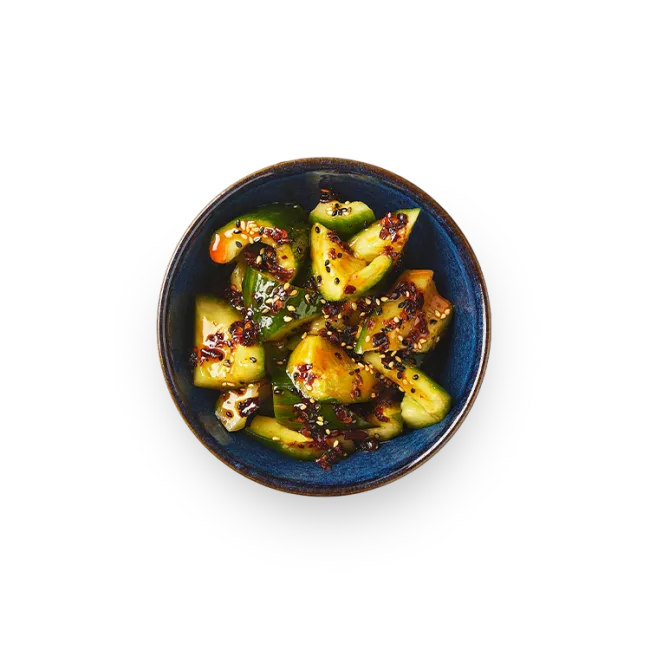 £4.50
£4.50smashed cucumber topped with crispy chilli oil. sesame seeds + oil
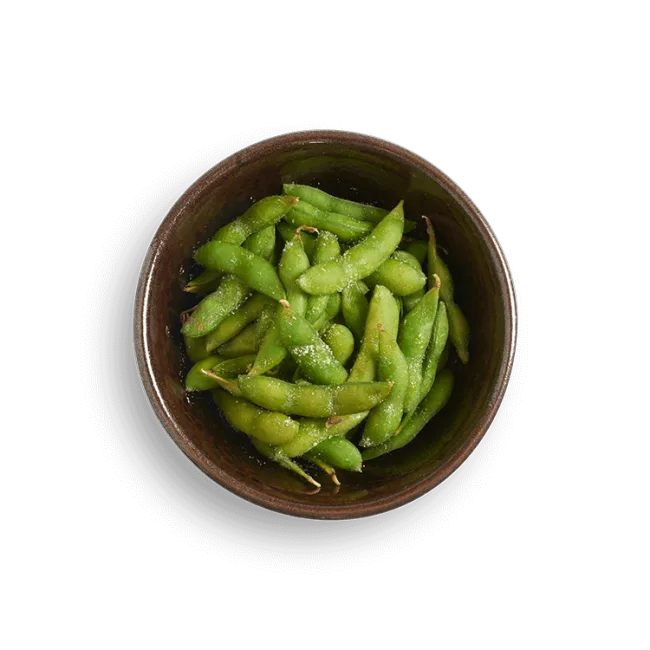 £5.10
£5.10beans with salt
Comments
No comments yet. Be the first to say something.